This column was originally featured on Newportri.com.
Jamestown is a close-knit community, and that sense of connection is one of its greatest strengths. It also gave rise to The Jamestown Fire Department’s Community Outreach and Support Team (JFD COAST), whose volunteers have spent the past three years building trusted connections between residents and local services. Newport Mental Health and JFD COAST are now drawing on that trust to better understand Jamestown’s behavioral health needs and determine how Newport Mental Health’s evidence-based approaches can best support their community.
In 2024, Jamestown experienced a number of suicide-related incidents, primarily involving young people. Incidents like these can have a devastating impact on families and send ripples of grief throughout a community. The effects can reach into every aspect of community life: families navigating loss while trying to maintain daily routines, classmates and teachers coping with grief at school, coworkers mourning a colleague, and first responders and neighbors carrying the weight of a tragedy close to home.
Recognizing that these experiences call for a community-wide response, Jamestown is working with Newport Mental Health and drawing on its trusted relationships to strengthen prevention and support in an effort to recognize distress earlier, respond more quickly, and make it easier for residents and families to ask for help.
To explore what’s happening in Jamestown, Newport Mental Health and JFD COAST have launched a series of listening sessions where residents can describe their barriers to seeking help, the resources they trust, and the opportunities they see for strengthening community support.
The answers will help shape a longer-term suicide prevention initiative.
Community voice is central to this project. Jamestown residents bring firsthand knowledge of the relationships, experiences, and barriers that shape whether people seek help. By listening to those perspectives, Newport Mental Health and JFD COAST can better understand what support residents need and how to make it accessible and trusted. Rather than bringing a predetermined strategy to Jamestown, the partnership is inviting residents to help shape a suicide prevention approach grounded in the community’s own experiences, strengths, and priorities.
“We don’t want to just plant a strategy on top of Jamestown based on what’s worked in other communities,” said Michael Lichtenstein, JFD COAST Co-Chair and volunteer whose background includes behavioral health and primary care. “We want to find out: What do residents think we need? What do they think would be important to help support youngsters and their families when crisis hits?”
“It’s a lot of learning. And in that learning, there will be teaching. We want to engage the community in helping us figure this out,” Lichtenstein said.
Building on Community Trust
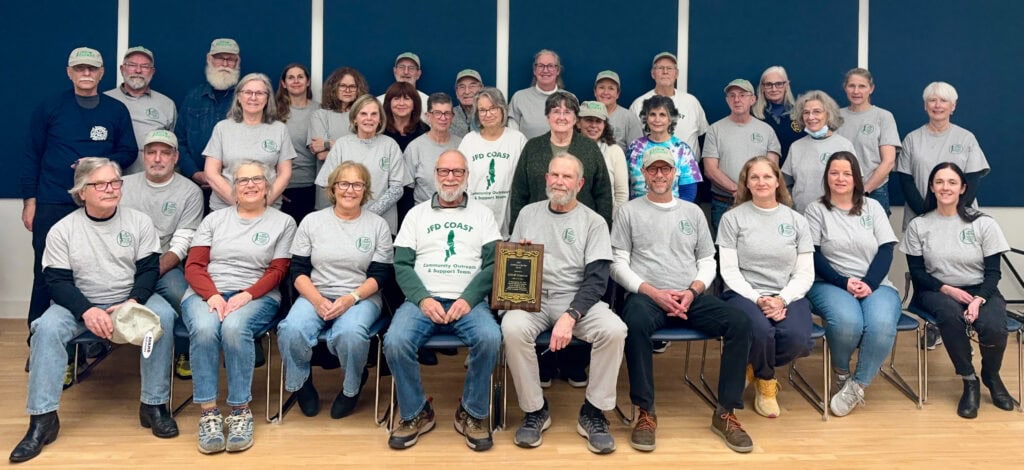
The partnership builds on work JFD COAST has been doing in Jamestown for the past three years. What began with the simple idea of providing free transportation to medical appointments has grown into a broader network of community assistance. JFD COAST volunteers conduct home-safety assessments, help residents connect with services, and provide other practical support.
The organization’s approximately 40 volunteers include people with backgrounds in medicine, nursing, occupational and physical therapy, behavioral health, education, architecture, business, and other fields. All services are provided at no charge to Jamestown residents, and this work is made possible through the ongoing encouragement and leadership of JFD Chief Howie Tighe and JFD COAST Co-Chair David Pritchard, notes Lichtenstein.
As JFD COAST’s work expanded, volunteers increasingly encountered residents and families facing behavioral health concerns. They identify needs and help connect people to resources, but there are limits to what volunteers can provide directly.
“We refer and support,” Lichtenstein said. “We don’t provide the healthcare services, but we can suggest and create linkages.”
Newport Mental Health is one of their resources, providing access to a broad range of behavioral health services, including mobile crisis response for adults and children.
What is the Best Response in a Behavioral Health Crisis?
JFD COAST volunteers have heard from families who hesitate to seek help during a behavioral health crisis because they are concerned about the visibility of the response. In a small community, an emergency response can quickly become something neighbors notice and ask about, potentially adding another layer of stress to an already difficult situation.
“We’ve been working with police and fire to figure out how we can work together efficiently when there’s a behavioral health crisis,” said David Boscia, chief clinical officer at Newport Mental Health. “We can respond without lights and sirens, which can be important. The emergency clinician shows up in their car, or the Rhode Island Outreach team arrives in their white van.”
How a behavioral health crisis response begins can influence what happens next. Bringing clinical expertise into the response early and quietly may help identify what is driving the crisis, support de-escalation, and prevent the situation from worsening. This approach allows police, fire, and EMS personnel to focus on immediate safety while behavioral health professionals assess clinical needs and connect the person with appropriate care.
“Part of the listening session is hearing what people think needs to change about a response,” Lichtenstein said. “Not just prevention, but intervention, which is all part of prevention, ultimately.”
The listening sessions will also give residents an opportunity to learn about the behavioral health resources already available to them and how to access those services when help is needed.
“The goal is for people to think of us and call us,” Boscia said. “Newport Mental Health never gives up on someone who needs help. A call connects people with a trained behavioral health professional who can provide immediate support and help determine the appropriate next step. Services are confidential and available 24 hours a day, seven days a week.”
“We want people to know there is a resource and a helping hand in Jamestown for anyone who feels like suicide is the answer to their issues and concerns,” Lichtenstein said.
Listening to Young People
The voices of young people and the adults who support them are particularly important to this effort. Jamestown students attend school on the island through eighth grade and then transition to high schools outside the community. NMH and JFD COAST want to better understand what that transition looks like for students and what kinds of support could help young people navigate it.
“We want to hear from youth themselves. We want to hear from adults who may have families now, and from older adults who have been around for a while and have seen, observed and maybe been part of the tragedy,” Lichtenstein said. “We want to hear from those who grew up in Jamestown and experienced what it’s like to be part of a closed community and then go off to the big world, so to speak, and what that transition is like.”
The conversations are also an opportunity to examine how attitudes toward mental health have changed and where stigma remains.
Lichtenstein said he has seen significant differences between generations in how openly people talk about mental health. Older residents may have grown up hearing that emotional difficulties should remain private, while younger people are increasingly comfortable talking about anxiety, therapy, and counseling.
JFD COAST has already created opportunities for conversation through its work with the American Foundation for Suicide Prevention, including hosting an International Survivors of Suicide Loss Day event in Jamestown. Two JFD COAST volunteers have also helped establish a monthly survivors-of-suicide-loss support group.
Those experiences have reinforced the importance of creating places where people can talk about difficult experiences without feeling they have to carry them alone.
Turning What We Hear into Action
The listening sessions will shape the next phase of the partnership. After gathering residents’ perspectives, Newport Mental Health will work with a Zero Suicide consultant to translate the findings into a report. Newport Mental Health, JFD COAST, and other town leaders will then use that report to determine how to put what they learned into action, Boscia said.
For Jamestown residents, the message at this stage is straightforward: your voice matters. Newport Mental Health and JFD COAST want to hear from those who live in Jamestown, who know and understand the community, and who want to help strengthen support for its residents.
Residents interested in participating can contact JFD COAST ([email protected]) for information about upcoming listening sessions.
These conversations will help create an evidence-based prevention strategy grounded in the realities of Jamestown life; one that helps residents recognize when support is needed, know where to find it, and trust that they do not have to face a crisis alone.
You can read more about Zero Suicide here: https://zerosuicide.edc.org/. Dayna Gladstein is President & CEO of Newport Mental Health in Middletown. This article is co-written with Kristan McClintock and runs in the Newport Daily News and online at newportri.com.
Photo by Shahin Barzin. The COAST team receives the JFD Member of the Year award.